You know what the best time to trout fishing Lake Michigan is?
Most people get it wrong. They think any time works. Spring? Sure. Summer? Maybe. Fall? People show up at the wrong time and catch nothing.
The best time for trout fishing on Lake Michigan peaks at specific times, and it has nothing to do with guessing. Water temperature is the key. When the water’s the right temp, trout actually feed. When it’s not, they hide deep and ignore your lure.
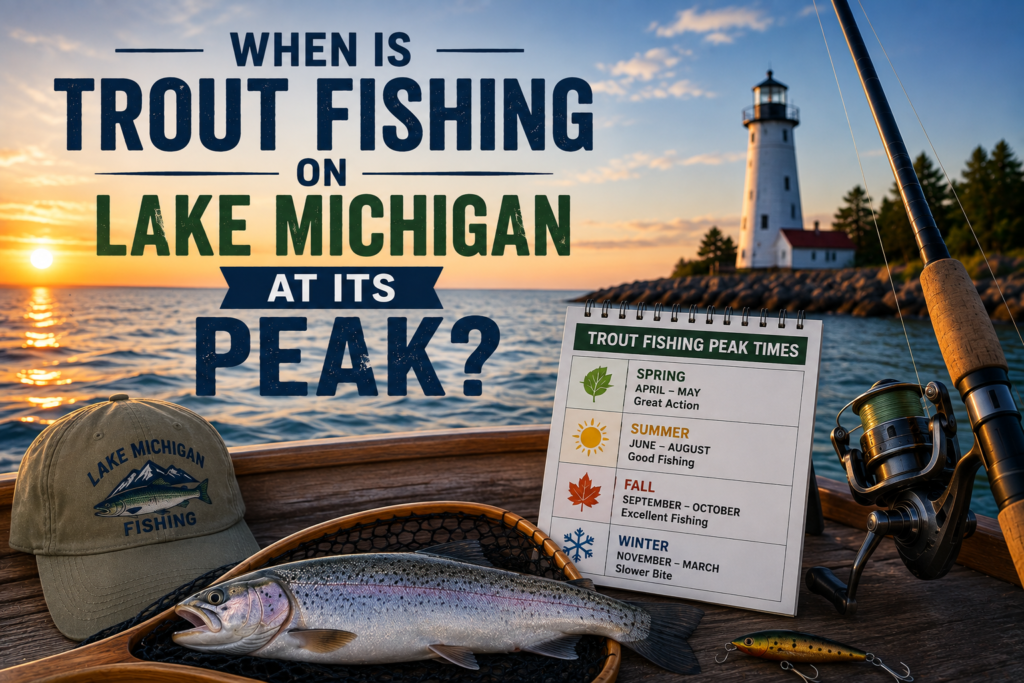
Spring and fall are your money times. The water cools down just enough to wake trout up. They’re hungry. They’re active. You’re catching fish instead of sitting around wasting time.
Lake Michigan has steelhead, brown trout, and lake trout swimming around. Each one acts a little differently depending on the season. But here’s what they all have in common is temperature, and it controls everything. Learn what temps each species likes, and you’re already fishing smarter than 90% of people out there.
Lake Michigan Trout Fishing: Spring’s Transition Period
April and May are genuinely special months on Lake Michigan. The ice clears out, water temperatures stabilize in the 48-58°F range, and suddenly the trout that spent the winter hugging the bottom start moving up toward shallower feeding zones. It’s literally like someone flips a switch.
Those river mouths and tributary systems become the hotspots where all the action happens. You’ll see steelhead pushing upstream to spawn. Brown trout follow right behind them. Fishing trout in Lake Michigan near these river mouths in spring is when you’ll understand why experienced captains always mark these months on their calendars.
Start fishing early. Seriously, that dawn-to-mid-morning window is crucial. The temperature gradient between night water and warming morning water creates this feeding surge you absolutely want to catch.
Fishing Trout Lake Michigan: Why Summer Kills Most Anglers’ Confidence
June, July, August- this is when casual anglers usually hang it up and wait for fall. The surface water gets stupid warm, hitting 72-75°F regularly. Trout can’t handle summer heat. They drop down into the deep, cool layers where oxygen still exists. The water gets stratified, thermocline layers kick in and everything shifts about where these fish go and how they feed. Yeah, you can still catch them in summer, but you’ve got to completely change how you fish.
Deep water becomes mandatory. We’re talking 90-120 feet for lake trout, 60-80 feet for your brown trout and steelhead. Shallow water jigging doesn’t work anymore. You need to troll at depth. Downriggers aren’t optional anymore, they’re essential. Speed matters way more than it does in spring. These fish are feeding, but it’s selective. They eat before the sun climbs too high in the sky.
Michigan Lake Trout Fishing: Fall Is When Everything Clicks
September through early November hits differently. This is genuinely peak season, and there’s a good reason why. Water temperatures drop from summer’s extreme levels back down toward 55-62°F. The thermocline that was causing all your headaches? It breaks down. Oxygen distribution normalizes. Michigan Lake trout fishing actually becomes fun again instead of a complex puzzle.
Trout migrate back to shallower water, usually 20-50 feet. Shore-based fishing works. Charter captains gain flexibility they didn’t have during summer. Jigging, trolling, fishing from piers, and different methods all work well because the fish are accessible across multiple depth zones.
Here’s what actually happens in fall that gets anglers excited, trout go into aggressive feeding mode because spawning season is literally right around the corner. Their metabolism spikes because of the temperature change and their biological clock telling them winter’s coming.
What Really Matters When You’re Actually On The Water
Daily conditions matter just as much as your season choice. Wind direction controls how warm surface water gets distributed. When northwest winds get strong, they actually push warm surface water offshore and expose cooler layers underneath, which sounds backwards but can temporarily improve fishing on Lake Michigan even in summer. Barometric pressure dropping before weather systems roll in? Trout go into feeding frenzies like they haven’t eaten in weeks.
Don’t bother in bright sunlight. Overcast conditions make trout bolder. The first couple hours after sunrise produce the most consistent bites throughout the year. When light levels are low, trout hunt more actively. Your lure presents more naturally. Fish lack the visibility to scrutinize your presentation too closely.
Bottom Line
So here’s what it comes down to, you can’t just wing trout fishing on Lake Michigan. Temperature, timing, and knowing what to do when conditions change that’s what separates people who catch fish from people who don’t.
Don’t try to figure this out alone. Book with Fish Master Guide. Their captains live on this lake. They know when the water’s right, where the fish actually are, and how to fish each season. They’re not running the same playbook every week. They’re paying attention to what’s actually happening.
Book your trip. Show up ready. Catch trout.