Salmon fishing on Lake Michigan is quite hard. The fish fights hard, jumps crazy, and would test everything you’ve got. That’s why people from all over the country love to come here for fishing, but timing is everything; show up at the wrong time and your whole day is wasted.
Here’s what makes it interesting: salmon actually migrate from the ocean into freshwater to spawn. They travel hundreds of miles back to where they were born. Lake Michigan’s salmon do this same thing, and it happens in waves throughout the year. When they arrive, their behavior changes completely.
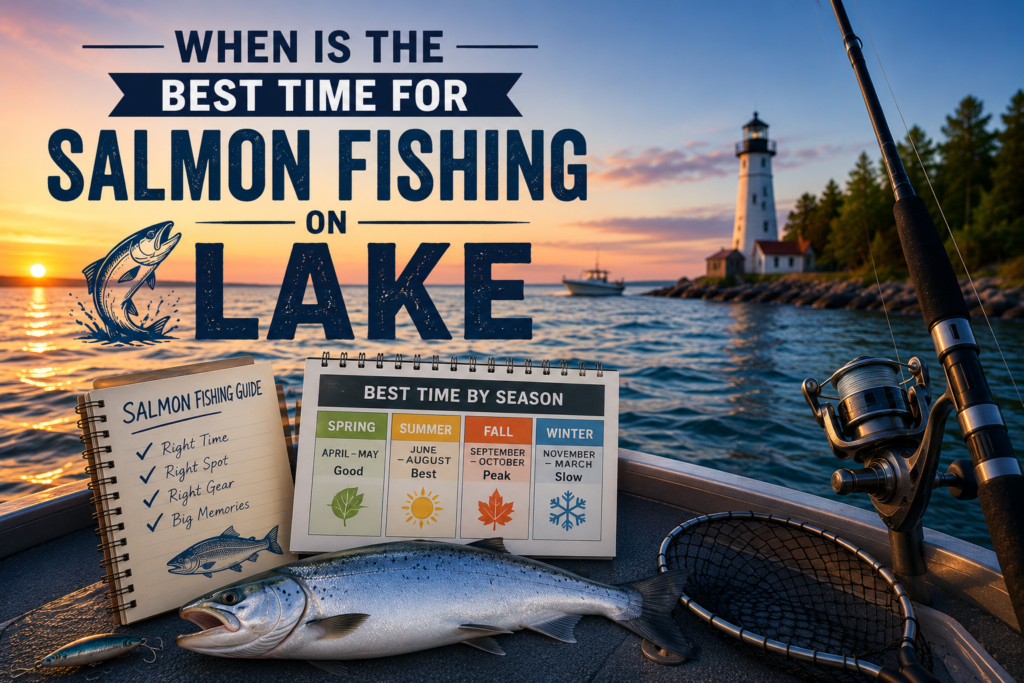
So when is the best time for salmon fishing on Lake Michigan? It depends on water temperature, what time of year it is, and where the salmon are actually positioned. Get these three things right and you’ll catch fish. Miss them, and you’ll be stuck staring at empty water. Let me break down exactly when it happens and why.
Salmon Fishing Charters on Lake Michigan: Spring Opportunities
Spring changes the entire dynamic. April through May marks the transition period when ice melts, water begins warming, and salmon position themselves at intermediate depths. They’re not shallow, not deep, but accessible. Salmon fishing charters on Lake Michigan operate heavily during this window because conditions favor both captain and angler.
Water temperatures range 45-55°F. Cold, but manageable. Salmon respond to jigging presentations and trolling at moderate depths, 40-80 feet typically. Salmon transition from winter patterns toward shallow feeding zones.
Charter captains know this window. They know the structure. They know where salmon stage before moving shallower.
Early morning produces better results than afternoon. Temperature fluctuations stabilize at dawn. Salmon settle into predictable zones. Light penetration improves near-bottom visibility; salmon see baits and lures better.
Best Time for King Salmon Fishing on Lake Michigan: Summer Patterns
Summer redefines the fishing challenge. June through July brings peak water temperatures; the Lake Michigan environment becomes stratified. Warm surface water sits above colder depths. Best time for king salmon fishing during summer means fishing where thermal layers create feeding zones typically 100-150 feet down.
King salmon, Chinook salmon specifically, behave differently than coho. They’re larger, more aggressive, and more selective about depth. Summer king salmon fishing targets cooler water columns where food concentrations peak. They won’t tolerate surface temperatures above 70°F for extended periods. So fishing shifts from morning-focused to specific depth-focused.
July represents peak summer. King salmon are established in deep zones. They’re feeding heavily before August’s waning period. Best time for salmon fishing technically peaks mid-July when established patterns have locked in, captains know exact zones, forage fish have established rhythms, and salmon show predictable feeding windows around structure.
Fall: The Underrated Window for Salmon Fishing Charters on Lake Michigan
August through October changes everything again. Water temperatures decline. Salmon shift shallower. Salmon fishing charters on Lake Michigan captains experience some of their best fall fishing during this transition. Surface temperatures cool to 65-70°F. Salmon distribute across broader depths. Fishing becomes less specialized, more opportunistic.
September stands out specifically. Summer heat breaks. Lake stratification destabilizes. Oxygen levels improve throughout the water column. Salmon spread across 30-100 feet, not confined to narrow zones like summer demands. This gives anglers flexibility. Different techniques work. Different depths work.
October presents the spawn window. Salmon move toward river mouths, toward tributaries. They’re less interested in feeding, more driven by reproduction instinct. But they’ll still take lures out of aggression or territorial response. Weather complicates October fishing, though. Storm patterns intensify. Water conditions become unpredictable.
Planning Your Salmon Fishing Trip
Here’s what to do: Don’t just pick a random month and book based on what worked last year.
Lake Michigan’s different every single year. Some springs come early. Some summers take forever. Early fall one year, late fall the next. Weather changes everything.
This is why you call your captain before you book. Ask what’s happening right now. What are they catching this week? What’s the water temp? Are conditions good or rough? That phone call changes everything.
Conclusion
The bottom line is salmon fishing on Lake Michigan works when you actually plan for it. Don’t just show up and hope. It doesn’t work that way.
Book with captains who know the lake like Fish Master Guide does. They see the water every single day. They know what’s biting and what’s not. That experience is worth paying for because it means you’re not spinning your wheels.
The best salmon trip isn’t luck. It’s preparation. It’s asking the right questions before you go. It’s understanding what’s happening in the lake right now, not just what happened last year.